

Why Understanding Excessive Barking Solutions Matters for You and Your Dog
Excessive barking solutions start with one simple truth: barking is natural. It’s how dogs communicate with us and the world around them. But when barking becomes loud, frequent, and disruptive—affecting your sleep, your neighbors, and your sanity—it crosses the line from normal behavior to a problem that needs solving.
Quick Solutions for Excessive Barking:
- Identify the cause – Is your dog bored, anxious, fearful, attention-seeking, or playing watchdog?
- Environmental management – Block visual triggers with curtains or frosted glass, create quiet zones, use white noise
- Training techniques – Teach the “quiet” command, reward silence, use positive reinforcement
- Provide exercise and stimulation – Daily walks, puzzle toys, interactive play
- Seek professional help – Consult a certified trainer or veterinarian for persistent issues
Many dog owners feel trapped in a cycle of frustration. Your dog barks, you yell, your dog barks more. You try punishment, inconsistent discipline, or expensive gadgets that don’t address the root cause. The result? You both end up stressed, and the problem continues.
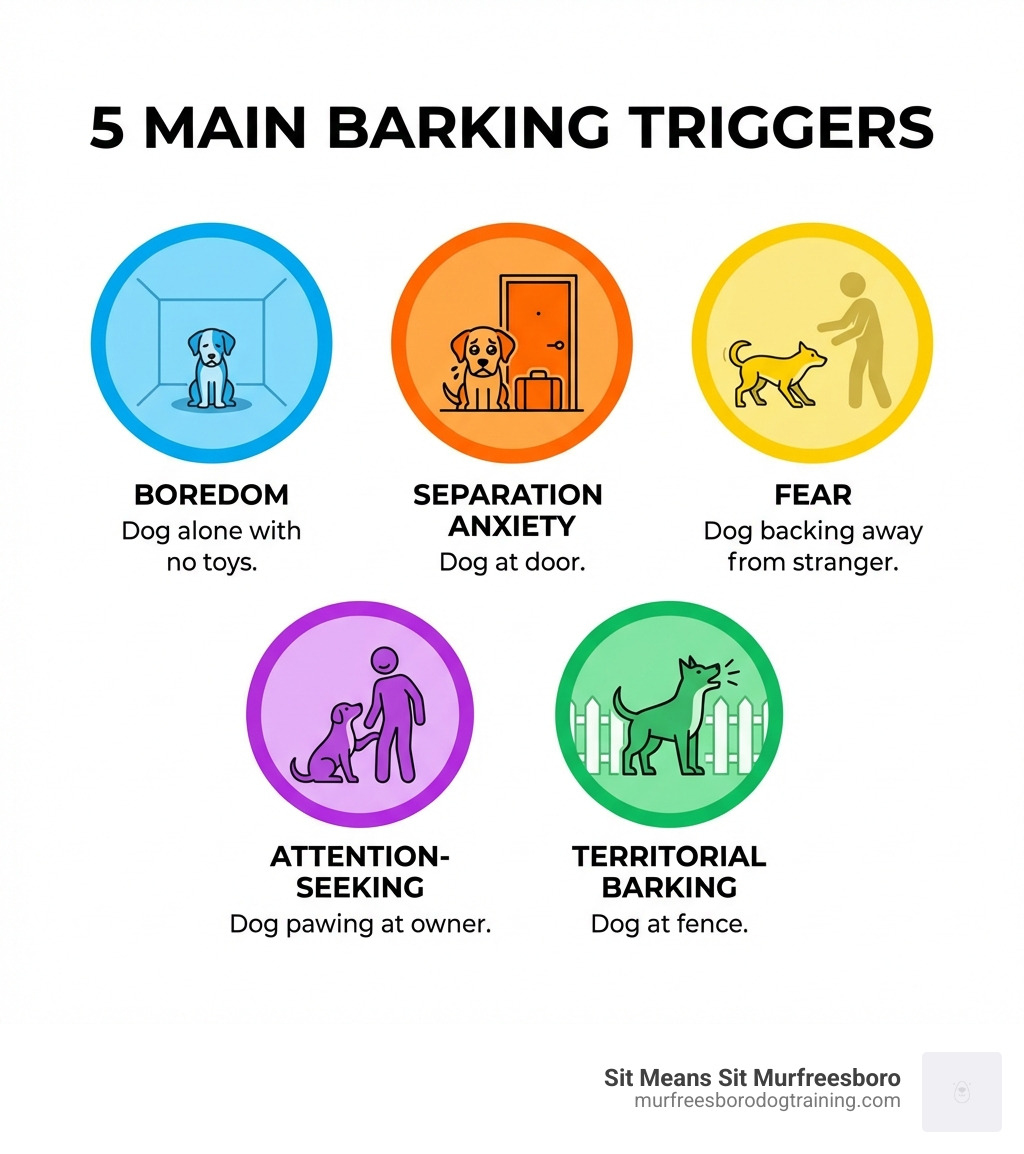
The good news: you can fix this. Research shows that understanding why your dog barks is the first step toward lasting change. Dogs bark for specific reasons—boredom, separation anxiety, fear, attention-seeking, or territorial instincts. Each cause requires a different approach.
This guide breaks down proven strategies to reduce excessive barking using humane, effective methods. You’ll learn how to manage your dog’s environment, teach alternative behaviors, and know when to seek professional help. No shock collars, no quick fixes that harm your dog’s trust—just practical solutions that work.
I’m Stephen Sovenyhazy, and while my primary expertise lies in digital strategy and platform development, I’ve spent years researching behavioral patterns and communication systems across various contexts, including effective excessive barking solutions for dog owners seeking evidence-based approaches. My goal is to translate complex information into actionable steps you can start using today.
Understanding the “Why” Behind the Bark

Before we can dive into excessive barking solutions, we have to play detective. If we don’t know why the “siren” is going off, we can’t turn it off effectively. In our experience working with families across Rutherford County, we’ve found that most barking falls into a few distinct categories.
Communication and Needs
Barking is your dog’s most useful form of vocal communication. They might be telling you the water bowl is empty, they need a potty break, or there is a very suspicious squirrel in the driveway. It serves a variety of functions, and expecting a dog to never bark is like expecting a human to never speak.
Common Barking Motivations
- Boredom: This is a major culprit. When dogs are left alone in a backyard in Smyrna or a living room in Walterhill with nothing to do, barking becomes a “leisure-time activity.” It’s self-rewarding; it feels good to make noise when you’re under-stimulated.
- Fear and Anxiety: A dog might bark at strangers or loud noises because they are afraid. This is often defensive—they are trying to create distance between themselves and the “scary” thing.
- Attention-Seeking: If your dog barks and you look at them, yell at them, or give them a treat to shut them up, they’ve won. They’ve learned that barking is the “on” button for human interaction.
- Watchdog/Territorial: This is the classic “stay away from my porch” bark. It’s triggered by people, dogs, or even the mail carrier approaching the home.
- Greeting: Some dogs are just “talkers” when they’re happy. They bark with a wagging tail and relaxed body language when you walk through the door.
- Compulsion: This is a repetitive bark, often accompanied by a fixed movement like running back and forth along a fence. It’s often a sign of deep-seated stress.
- Frustration: This happens when a dog is prevented from getting something they want, like a toy stuck under the couch or a friend they can’t reach through a fence.
Health, Age, and Breed
It’s not always “just” behavior. A dog’s age and health status play a massive role. For instance, untreated pain has been linked to new or worsening fear of noises. If your senior dog suddenly starts barking at the dishwasher, they might be experiencing physical discomfort or cognitive decline.
Breed also matters. Some breeds are genetically predisposed to be more vocal. While we can’t change a Beagle’s DNA, we can manage the environment and provide better outlets for that energy.
Environmental Management and Excessive Barking Solutions
One of the fastest ways to see results is to change the environment. If your dog can’t see the trigger, they are much less likely to bark at it. This is a cornerstone of effective excessive barking solutions.
Sight Barriers
If your dog spends their day at the window barking at every car that passes through Christiana, you need to block the view.
- Window Clings: You can use spray-on glass coating or static cling window film to make windows opaque. This lets light in but blurs the “intruders” outside.
- Privacy Fencing: In the yard, use privacy screening to cut off views to neighboring yards or the street.
Quiet Zones and Sound Masking
Creating a “doggy quiet zone” can work wonders, especially for dogs with separation anxiety. This should be a safe space away from the front door or busy windows.
- White Noise: A white noise machine, a fan, or a radio can mask exterior sounds like sirens or neighbors’ dogs.
- Calming Music: There are even playlists of soothing music designed for pets that can help lower a dog’s overall stress level.
Comparison of Management Strategies
| Strategy | Best For | Implementation |
|---|---|---|
| Sight Barriers | Territorial & Alarm Barking | Window film, privacy fencing, closed blinds |
| Sound Masking | Noise Sensitivity & Anxiety | White noise machines, soothing music |
| Quiet Zones | Separation Anxiety | A crate or secluded room with a bed |
| Activity Zones | Boredom Barking | KONG toys and puzzle feeders |
Implementing Home-Based Excessive Barking Solutions
Management isn’t just about blocking things out; it’s about providing better options. We want to keep your dog’s mouth and mind busy so they don’t have the “bandwidth” to bark.
Interactive Toys and Puzzles
A bored dog is a barking dog. To prevent this, ensure they have plenty of mental stimulation.
- Food Puzzles: Use interactive dog toys or a dog puzzle toy that requires your dog to work for their kibble.
- Long-Lasting Chews: Our go-to replacements for barking are squeaky toys or Himalayan chews. These keep their mouths occupied in a productive way.
Using Gates and Crates
If your dog gets overstimulated by the arrival of guests, don’t let them greet people at the door immediately. Use adjustable gates like these or a baby gate to keep them in a different area until they have settled down. A crate decked out with a comfy bed and a privacy cover can also serve as a “reset” button for a dog that is becoming too reactive.
Training Techniques and Addressing Triggers
While management helps in the short term, training is what creates long-term reliability. At Sit Means Sit Murfreesboro, we focus on real-world reliability, meaning your dog listens even when there are distractions.
Positive Reinforcement and Clicker Training
The most effective way to change behavior is to reward what you want rather than just punishing what you don’t want.
- Marking the Moment: Use a clicker to mark the exact second your dog is quiet. Every click is followed by a dog training treat.
- High-Value Rewards: When teaching excessive barking solutions, use the “good stuff”—chicken, cheese, or specialized dog treats.
Teaching Incompatible Behaviors
You can’t bark if you’re busy doing something else!
- Go to Your Mat: Teach your dog to go to a mat and stay there when the doorbell rings.
- Fetch a Toy: If your dog barks for attention, teach them that they only get pets if they bring you a specific toy first. This replaces the vocal demand with a physical task.
Dealing with Separation Anxiety
If your dog barks or howls the moment you leave your home in Rockvale or Lascassas, they may be suffering from separation anxiety in dogs. This is an emotional disorder, not just “bad behavior.” It often requires a slow desensitization process where you practice leaving for very short periods and building up their confidence.
The Extinction Burst
When you stop rewarding a behavior (like ignoring a dog that is demand-barking for your dinner), the behavior will often get worse before it gets better. This is called an “extinction burst.” Your dog thinks, “Barking usually works… maybe I just need to bark LOUDER?” If you give in during this burst, you are teaching them that loud, frantic barking is the key to success. Stay consistent!
Teaching the Quiet Command as One of the Excessive Barking Solutions
Teaching a “Quiet” command is a game-changer. It gives you a way to communicate exactly what you want in the heat of the moment.
Step-by-Step Guidance for Teaching “Quiet”
- Trigger a Bark: You can’t teach “quiet” without a little noise. Have someone knock on the door or ring the bell.
- Acknowledge and Command: Let them bark two or three times (they are doing their job, after all). Then, say “Quiet” in a calm, firm voice.
- The Pause: Wait for even a half-second of silence. You can use a high-value treat to lure their attention away from the door.
- Reward: The instant they stop barking to sniff the treat, click (or say “Yes!”) and give them the reward.
- Increase the Duration: Gradually wait for longer periods of silence (3 seconds, then 5, then 10) before giving the treat.
- Consistency is Key: Everyone in the house must use the same command and the same reward system.
Ethical Considerations and Professional Guidance
When looking for excessive barking solutions, it can be tempting to reach for “quick fixes.” However, many of these tools come with significant risks to your dog’s mental and physical health.
Avoiding Aversive Methods
We strongly advise against electronic shock collars and debarking. Punishment has harmful effects on the physical and mental health of your dog.
- Shock Collars: These cause physical pain and emotional distress. They can lead to “learned helplessness” or even increased aggression because the dog associates the pain with whatever they were barking at (like a child or another dog).
- Debarking: This is an invasive surgical procedure that removes the dog’s ability to vocalize but does nothing to address the underlying stress or boredom. It’s a “solution” for the human, not the dog.
Humane Tools
If you need a bit of extra help, there are more gentle options:
- Citronella spray collar: These emit a burst of plant-based scent that distracts the dog without causing pain.
- Ultrasonic anti-bark birdhouse: These emit a high-pitched sound only dogs can hear, which can startle them out of a barking fit.
- ThunderShirt pressure wrap: This applies gentle, constant pressure to help dogs feel more secure, similar to swaddling a baby.
When to Seek Professional Help
If your dog’s barking is driven by severe anxiety, aggression, or if you’ve tried these steps and aren’t seeing progress, it’s time to call in the experts. A humane dog trainer or an AnimalKind accredited trainer can provide a customized plan.
Additionally, always consult your veterinarian if there is a sudden change in behavior. Hearing loss, dental pain, or neurological issues can all cause increased vocalization.
Frequently Asked Questions about Excessive Barking
What is an extinction burst and how do I handle it?
An extinction burst is a temporary increase in the frequency or intensity of an unwanted behavior when it is no longer being reinforced. For example, if you stop giving your dog a treat when they bark at the table, they might bark louder and longer for a few days. The key is to remain completely consistent. If you give in just once during an extinction burst, you accidentally teach your dog that they just need to be more annoying to get what they want.
How can I stop my dog from barking for attention?
The most effective way is to “be a tree.” When your dog barks for attention, turn your back, cross your arms, and avoid eye contact. The moment they are quiet—even just to take a breath—turn around and praise them. You want to teach them that “Quiet = Attention” and “Barking = Boring.”
When should I seek professional help for my dog’s barking?
You should reach out to a professional if:
- The barking is accompanied by signs of severe distress (shaking, destructive behavior).
- The barking is directed aggressively toward people or other animals.
- You live in an apartment and are facing eviction threats from neighbors.
- You’ve tried basic training for over a month with no improvement.
- You feel your relationship with your dog is suffering because of the noise.
Conclusion
At Sit Means Sit Murfreesboro, we understand that your dog is a member of your family. Living with a dog that barks constantly is exhausting, but it doesn’t have to be your “new normal.” By combining environmental management, consistent training, and a deep understanding of your dog’s needs, you can restore peace to your home.
Whether you’re in Smyrna, Christiana, or right here in Murfreesboro, our team is dedicated to providing real-world reliability. We focus on personalized training that addresses complex behavioral issues while providing the ongoing support you and your dog need to thrive. You don’t have to do this alone.
Ready to start your journey toward a quieter, more confident companion? Check out our training programs today and let us help you find the right excessive barking solutions for your unique situation. Together, we can transform that “problem noise” back into the happy, healthy communication it was meant to be.