
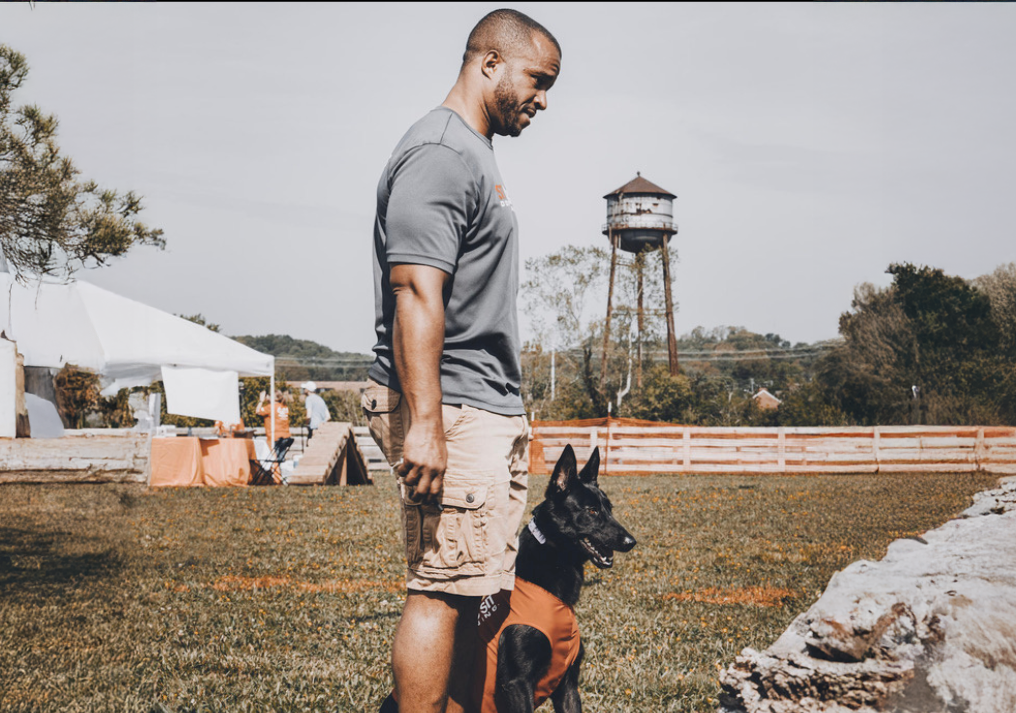
When people begin working through dog training in Murfreesboro TN, most of the focus naturally goes toward the dog. What is the dog doing? Why is the dog behaving this way? How do we get the dog to respond better?
But over time, something becomes clear. The biggest breakthroughs in training often don’t come from changing the dog. They come from small shifts in how the interaction is being handled.
That’s not a criticism—it’s simply how learning works. Dogs respond to patterns, and those patterns are shaped by the consistency, timing, and clarity of the person guiding them. When something feels off in training, it’s usually not because the dog is incapable. It’s because something in the process is creating confusion.
Most of these mistakes aren’t obvious at first. In fact, they often feel like the right thing to do in the moment. But over time, they create gaps that make behavior harder to stabilize.
One of the most common issues shows up in the way commands are used. When a dog doesn’t respond right away, it’s natural to repeat the command. It feels like reinforcement. But what the dog actually learns is that the first cue doesn’t matter. The real cue becomes the second, third, or fourth repetition. Over time, this creates a delay in response, not because the dog is ignoring the handler, but because they’ve learned that immediate response isn’t required.
Another pattern that develops quickly is inconsistency in follow-through. A dog is asked to hold position, but when they move, nothing happens. Or sometimes it’s reinforced, and other times it’s ignored. From the dog’s perspective, the expectation becomes unclear. They aren’t sure when something matters and when it doesn’t, so they begin to test the situation instead of simply responding.
These moments seem small, but they add up. Dogs are constantly reading the interaction in front of them, and when that interaction changes from one moment to the next, behavior becomes less stable.
There’s also a tendency to focus too heavily on the moment after behavior instead of the moment before it. When a dog reacts, pulls, or ignores direction, the response often comes after the behavior has already happened. The handler tries to fix it in real time, but by that point, the pattern has already played out.
Training becomes much more effective when that focus shifts earlier. The goal is to step in before the behavior fully develops, guiding the dog through the moment instead of reacting to it afterward. That shift alone changes how quickly behavior begins to improve.
Environment plays a role in this as well. Many owners unintentionally train their dog only in settings where the dog is already likely to succeed. The house, the yard, or a quiet street become the primary training locations. In those environments, behavior looks consistent, which creates the impression that the dog understands what to do.
But as soon as the environment changes, the behavior often changes with it. This leads to frustration because it feels like the dog has forgotten everything they’ve learned. In reality, they’ve only learned it in one context.
That’s why expanding the environment gradually is such an important part of the process. When dogs are guided through new settings in a structured way, they begin to understand that expectations don’t change based on location. They learn how to carry behavior with them instead of leaving it behind.
Structured group environments are often where this becomes most noticeable. When other dogs, movement, and distractions are introduced in a controlled way, the dog has the opportunity to practice staying connected while the environment becomes more complex. Over time, this builds a level of consistency that holds up outside of training sessions. https://talkingtailstn.com/why-your-dog-needs-group-classes-to-master-distractions/
Another common mistake comes from trying to move too quickly. Progress feels good, and when a dog begins to respond better, it’s tempting to increase difficulty right away. But when the foundation isn’t fully stable, adding more variables can create setbacks.
Training works best when each layer is solid before the next one is introduced. That doesn’t mean progress has to be slow, but it does mean it has to be intentional. When the dog fully understands one level, the transition to the next becomes smoother.
There’s also a tendency to rely on motivation instead of clarity. When behavior is tied to excitement or rewards, the dog may respond well in certain moments but struggle when that motivation changes. Over time, this creates inconsistency because the dog is making decisions based on what they feel like doing rather than what they understand.
When training is built around clear guidance instead, that inconsistency begins to fade. The dog doesn’t need to evaluate the situation in the same way. They’ve already learned how to respond, so the behavior becomes more predictable.
If you look at broader behavior patterns, many of the challenges that show up later are tied to these early inconsistencies. Small gaps in timing, follow-through, and environment exposure gradually turn into habits that feel difficult to change.
This is why early structure can make such a difference.
In puppy training in Murfreesboro TN, these same patterns are easier to shape because they haven’t fully developed yet. When consistency is introduced early, puppies learn what to expect from the beginning. They don’t have to unlearn as much, which makes the process smoother for both the dog and the owner.
For dogs that are already further along, the process still works. It just requires more repetition and consistency to replace the existing patterns. The key is recognizing that the behavior isn’t random—it’s the result of what the dog has been shown over time.
For many owners, the biggest shift happens when they stop focusing only on what the dog is doing and start paying attention to how they are guiding the interaction. Small changes in timing, movement, and consistency often lead to noticeable improvements, sometimes faster than expected.
Training starts to feel less like correcting mistakes and more like shaping behavior as it develops.
For anyone working through dog training in Murfreesboro TN, this awareness is often what turns things around. The process becomes clearer, progress becomes more consistent, and the relationship between the dog and the handler becomes more stable.
And when that stability is in place, training stops feeling like something that’s constantly being managed and starts feeling like something that simply works.