
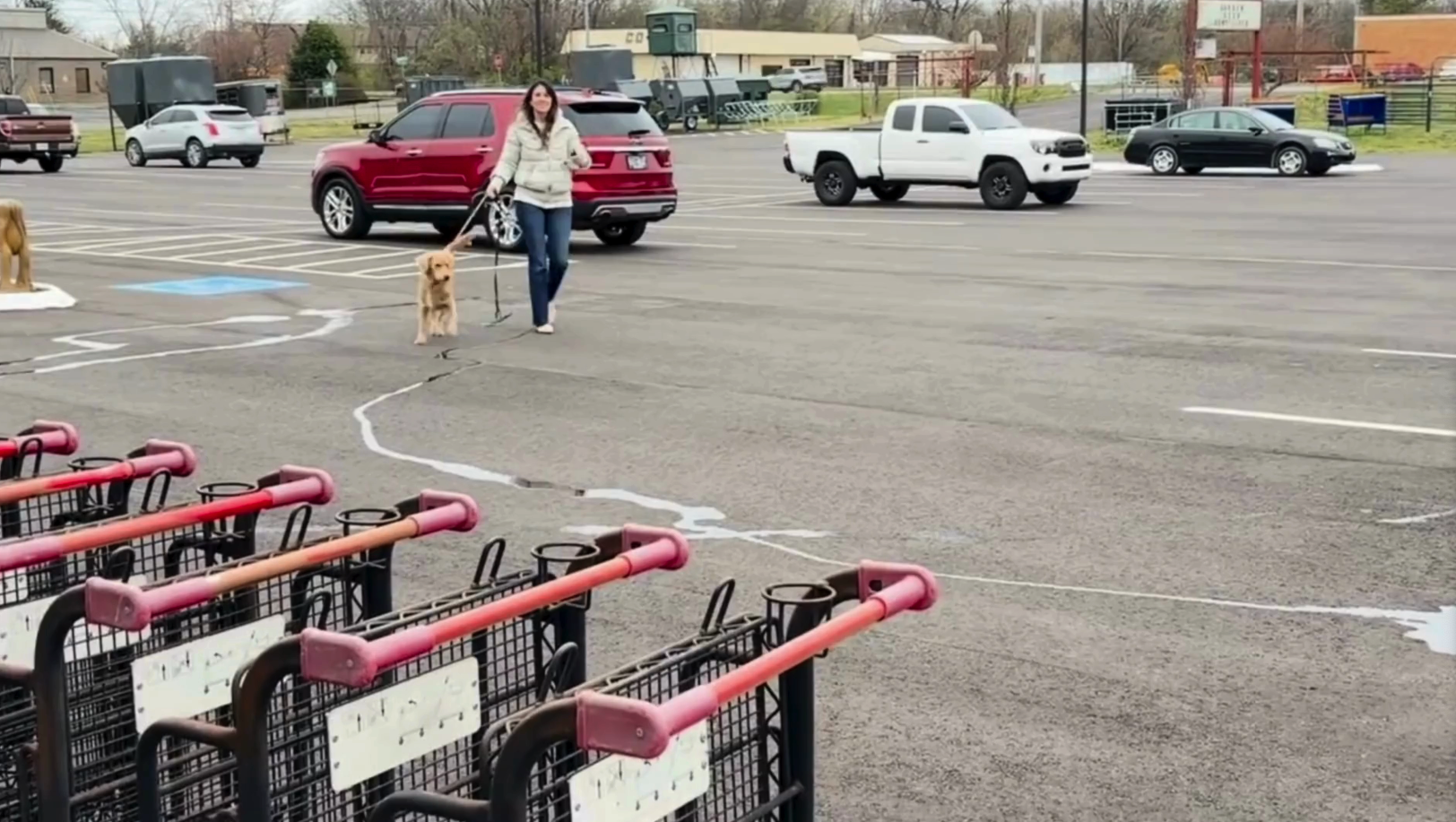
One of the most common frustrations people run into when working through dog training in Murfreesboro TN is this: their dog behaves well at home, but the moment they step outside, everything seems to fall apart. Commands that felt reliable suddenly don’t work. Focus disappears. The dog becomes distracted, reactive, or completely disengaged.
At first, it can feel confusing. From the owner’s perspective, the dog already “knows” what to do. They’ve seen the behavior happen over and over again in the house. So when that same behavior doesn’t show up in a different environment, it’s easy to assume the dog is ignoring them or choosing not to listen.
But what’s actually happening is much simpler than that.
The dog hasn’t learned the behavior in a way that transfers outside.
Inside the home, the environment is predictable. There are fewer distractions, fewer variables, and a level of familiarity that makes it easier for the dog to stay focused. In that setting, behavior feels consistent because nothing is competing for the dog’s attention.
Outside, everything changes. There are new smells, sounds, movement, and unpredictability. The environment becomes more stimulating, and the dog’s awareness naturally shifts toward those things. If the training hasn’t accounted for that shift, the behavior doesn’t hold.
This isn’t a failure of the dog. It’s a gap in how the training was built.
When a dog learns something in a single environment, they don’t automatically generalize it to others. In other words, just because a dog understands how to sit in the living room doesn’t mean they understand how to sit in a park, on a sidewalk, or around other dogs. Each of those situations feels different to them, and without clear guidance, they don’t connect those experiences.
That’s why behavior often looks reliable in one place and inconsistent in another.
To fix that, the focus has to shift from teaching behaviors in isolation to teaching behaviors across environments. The goal isn’t just to get the dog to perform something once. It’s to help them understand that the expectation remains the same no matter where they are.
This is where clarity becomes more important than repetition.
When a dog is guided consistently, they begin to recognize patterns rather than locations. They learn how to stay connected to the handler instead of relying on the familiarity of the environment. That connection becomes the anchor that carries behavior from one place to another.
Without that connection, the environment starts to take over. The dog begins to follow whatever feels most interesting in the moment, and the handler’s input becomes secondary.
You can see this play out clearly when distractions are introduced gradually. In a controlled setting, a dog may respond easily. Add a small distraction, and the response becomes slower. Add more movement or another dog, and the behavior may break entirely. This progression isn’t random—it reflects how much influence the environment has compared to the training.
If the training is built around commands alone, that influence is difficult to overcome. The dog hears the command, but their attention is already somewhere else. The words don’t carry enough meaning to compete with what they’re experiencing.
When the training is built around guidance, however, the dynamic changes. The handler isn’t relying on the dog to interpret a word. They’re actively shaping the interaction through movement, positioning, and timing. The dog doesn’t have to decide whether to listen—they’re already being guided into the correct behavior.
This is why structured exposure to distractions becomes such an important part of the process.
Group environments, in particular, create opportunities for dogs to practice maintaining focus while other things are happening around them. These settings aren’t random. They’re designed to introduce distractions in a way that allows the dog to succeed. Over time, the dog learns that the same expectations apply, even when the environment becomes more complex. https://talkingtailstn.com/why-your-dog-needs-group-classes-to-master-distractions/
As that understanding builds, the gap between indoor and outdoor behavior starts to close. The dog begins to respond more consistently, not because the environment has changed, but because their understanding has.
This is also where the idea of stability comes into play. A dog that knows how to hold position, stay connected, and respond to guidance has something to fall back on when distractions appear. Instead of reacting immediately, they have a clear alternative. That alternative becomes stronger each time it’s reinforced in a new setting.
For dogs that struggle with reactivity or overstimulation, this process is especially important. Many of those behaviors are tied to the dog becoming overwhelmed by their environment. When the environment feels unpredictable, the dog reacts in a way that makes sense to them. But when guidance is consistent, the dog begins to feel more stable. They know what to do, even when things around them are changing.
If you look at common behavior patterns, you’ll notice that inconsistency is often tied to context. The dog behaves one way in one place and differently in another. That’s not because the dog is choosing to behave differently—it’s because they haven’t been shown how to carry the behavior across those contexts.
For younger dogs going through puppy training in Murfreesboro TN, this is one of the most important concepts to build early. Puppies are constantly forming associations with their environment. When they are guided through a variety of settings from the beginning, they learn that expectations don’t change just because the location does. That early exposure creates a level of consistency that is much harder to build later on.
For dogs that are already struggling with this issue, the process is still the same—it just requires more intentional progression. Start in a controlled environment, build clarity, and then gradually introduce new variables. Each step reinforces the idea that the behavior remains the same, even as the surroundings change.
Over time, what once felt like two different dogs—one inside, one outside—begins to feel like one consistent pattern. The dog doesn’t need to relearn behavior in every new place. They carry it with them.
For anyone working through dog training in Murfreesboro TN, this is often where things begin to feel more predictable. The frustration of inconsistent behavior starts to fade, and in its place comes a clearer understanding of how dogs learn and how that learning transfers.
When training is built to move beyond the home, behavior stops being situational. It becomes reliable in a way that actually holds up in real life.